Outline of my podcast – structure is important
Having a well-structured podcast will help audiences to understand the topic. My episode consists of four distinctive parts, firstly a brief introduction of myself and the topic, followed by explaining why digital media can be used by parents to educate young children. I then elaborated on the other benefits of digital media education and introduced a guideline for parents to follow to maximise the benefits of digital media. Lastly, I discussed the limitations and recommended what future study should explore to give parents more guidance.
Strategies adopted to create podcast
First, let’s all have clear objectives and targeted audiences. My podcast targets those who are interested in personal growth and learning. When I made the cover, I clearly indicated my intention and named my podcast as ‘KIKI IDEAS’.
Second, think about Search Engine Optimisation (SEO)! I incorporated SEO principles when I named and described the podcast. Each episode has clear focus keywords, such as ‘Child Education’. Audiences can easily find it by searching keywords. I also tried to give clear, fun and creative names and description.
The cover and the theme will remain the same, the only thing that will change is the name of each episode and maybe the background photo. The background is a copyright free photo of my hometown Xi’an, China. The tower in called the bell tower, and it was built in 1384.
Third, it is all about recording. Tips are, speak like you are singing an opera i.e. keep your mouth open and words clear! Use the abdomen but not the throat to speak. Minimise smacking by sipping water and breath smart! Having good recording equipment will help, but it is not essential, making a start is definitely more important. I also practiced a lot, I mean, a lot..
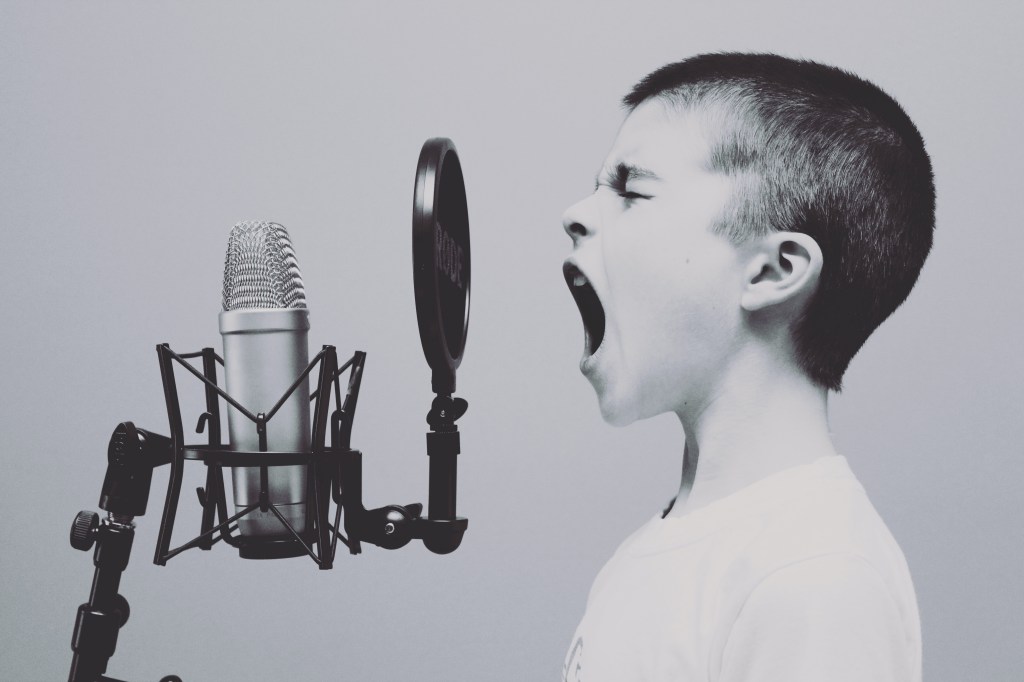
My mouth was opened so much that I felt I was exactly like the boy in the photo.
Research, Research & Research
You would not believe how many journals that I read just for the 7 minutes of podcast. I read at least 10 studies in detail, including the methodology and the results. In my podcast I clearly named who did the study, who were the participants, how many of them and what’s the result. I hope my audiences can feel that I was serious about the content.
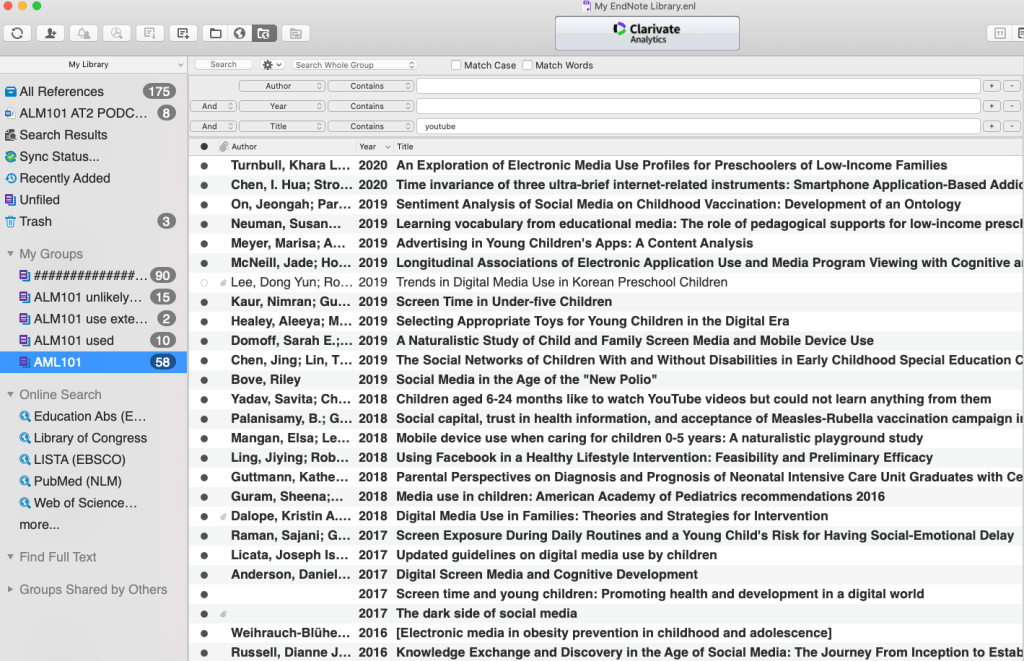
I looked through at least 60-70 abstracts just to know what’s going on, then picked the most trustworthy few within my best ability to be the references. I strongly recommend using a reference tool such as Endnote or Zotero, it will save you so much time organising the references.
Content Creation & Creative Commons
The contents are mostly my understanding and conclusions drawn from researches that I’ve read, in plain language. I made sure the contents are as clear as possible within my best ability. I also tried to make the contents contributing to my branding, i.e. a trustworthy pharmacist.
Creative Commons (CC) music is used strategically throughout the podcast to keep my audience interested and informed. Throwing a chunk of information without giving audiences a break might only make them sleepy or run away.

CC music is used strategically at the beginning, the end and in between each major sections to keep audiences interested and informed.
Challenges, Solutions & Learning
Every step of making this podcast is a challenge. Here are the major two parts I find especially challenging.
First there’s the need to find good literature to form the contents of the podcast. ‘Child & Education’ is such a big topic and there are so much information about it, some of the studies are conflicting each other. It is impossible to read all the information in short time even if the topic has already been narrowed down. It requires a systematic way to find the good literature. Literature searching skills and the ability to critically assess quality of studies are definitely something I need to work on more.
Then it is the recording part. The background noise, the unfamiliarity with the software, the endless repeating, and the need to find suitable CC music… But trust me, do not be a perfectionist! We will get better each time!
I was very unfortunate and fortunate in a way that opposite my apartment a construction is going on, and we are in the middle of a lock down (i.e. nowhere to go), so I had to learn the skills to erase those noises.
Thank you for reading, please follow me on links below or subscribe to my updates if you are interested to hear from me more. Until next time.
References used in the podcast
BOSWELL, N., BYRNE, R. & DAVIES, P. S. W. 2019. Prospects for early childhood feeding interventions: An exploration of parent’s concerns and acceptability towards social media intervention opportunities. Nutrition & dietetics: the journal of the Dietitians Association of Australia, 76, 444-454.
CAMPOS, L. F. X. A., CAVALCANTE, J. P., MACHADO, D. P., MARÇAL, E., SILVA, P. G. D. B. & ROLIM, J. P. M. L. 2019. Development and Evaluation of a Mobile Oral Health Application for Preschoolers. Telemedicine journal and e-health : the official journal of the American Telemedicine Association, 25, 492-498.
KARAAGAC, A. T. 2015. Undesirable effects of media on children: Why limitation is necessary? Indian Pediatrics, 52, 469-471.
KIRKORIAN, H. L., WARTELLA, E. A. & ANDERSON, D. R. 2008. Media and young children’s learning. The Future of children, 18, 39-61.
O’KEEFFE, G. S. & CLARKE-PEARSON, K. 2011. The Impact of Social Media on Children, Adolescents, and Families. PEDIATRICS, 127, 800-804.
PUTNAM, M. M., RICHMOND, E. M., BRUNICK, K. L., WRIGHT, C. A. & CALVERT, S. L. 2018. Influence of a Character-Based App on Children’s Learning of Nutritional Information: Should Apps Be Served with a Side of Media Characters? Games for health journal, 7, 121-126.
TERRAS, M. M. & RAMSAY, J. 2016. Family Digital Literacy Practices and Children’s Mobile Phone Use. Frontiers in Psychology, 7, 1957.
VANDEVIJVERE, S., SAGAR, K., KELLY, B. & SWINBURN, B. 2017. Unhealthy food marketing to New Zealand children and adolescents through the internet. The New Zealand medical journal, 130, 32-43.
 Kiki Collection